Guitar · bass · ukulele · piano
Know what to practise, every time you pick up your instrument
Practice Lab builds your plan, writes the exercises in every key and position with real fingering, and adapts each session to how the last one went. Free, in your browser, no account.
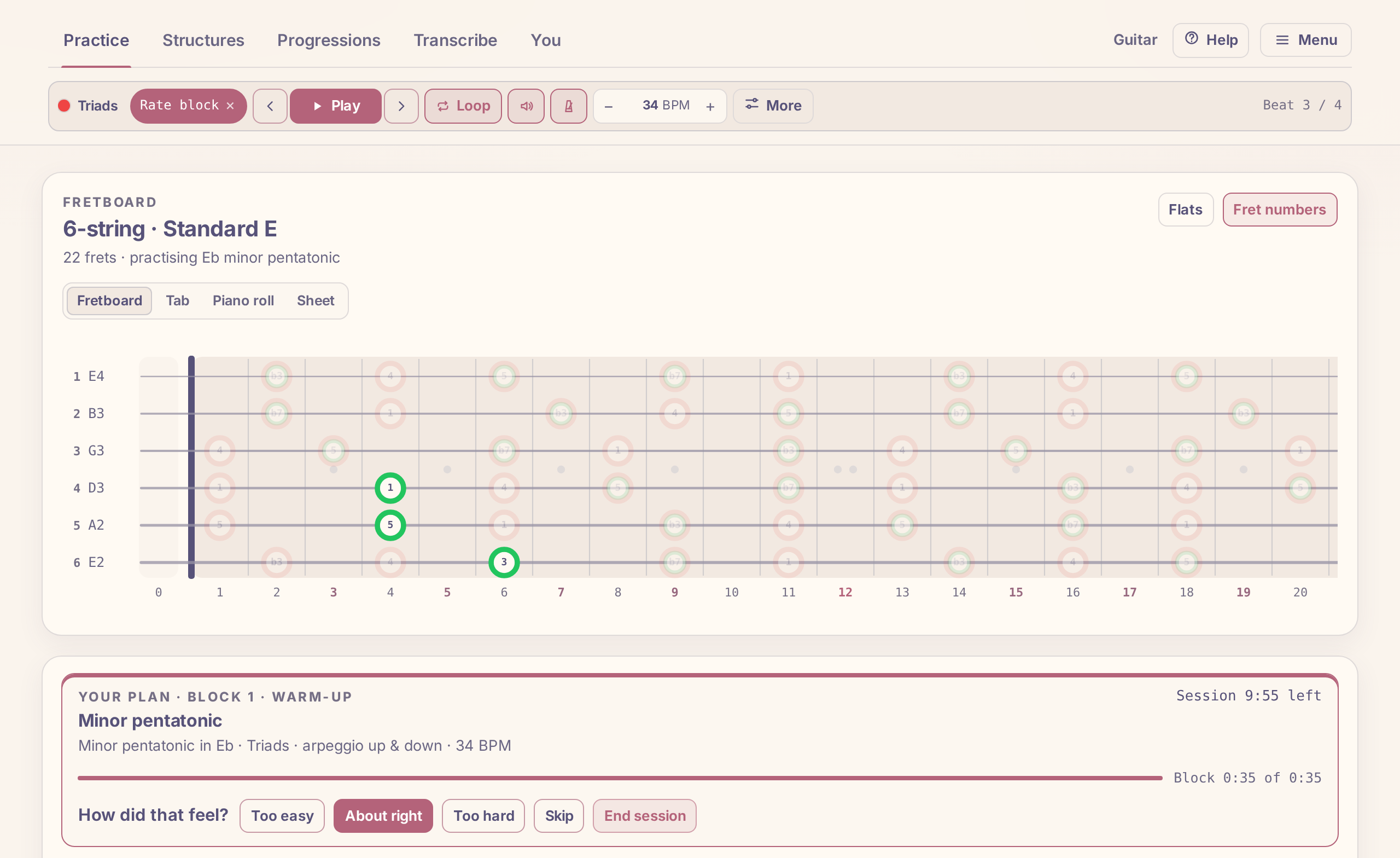
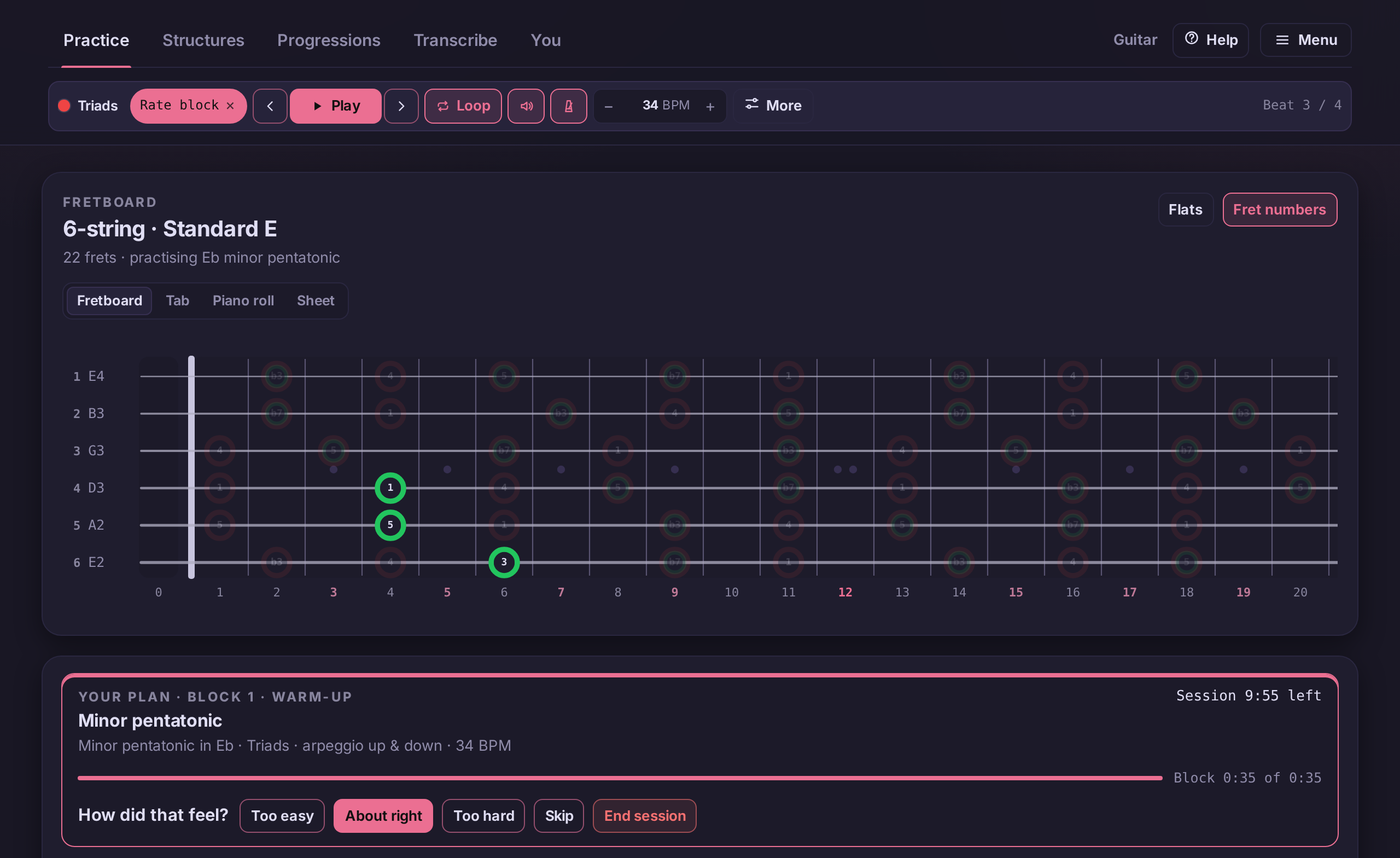
The plan
A coach that remembers what you know
A short setup asks what you play and what you already know, on paper and under your fingers, for each instrument. Practice Lab turns that into goals, and every session into blocks: a warm-up, goals interleaved, a review, a stretch near the end.
After each block you answer Too easy About right Too hard, and the next block moves its level and tempo to keep you between bored and lost.
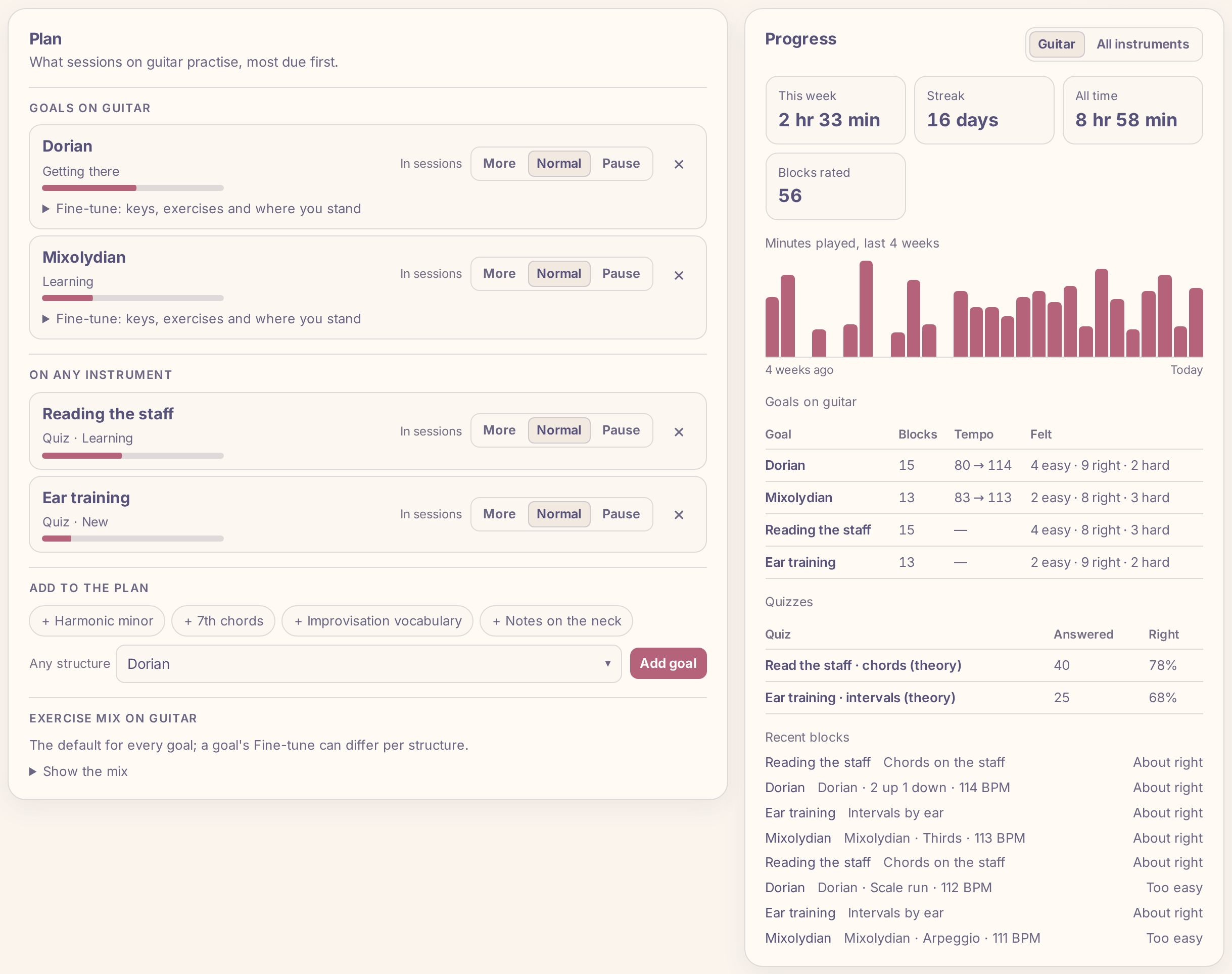
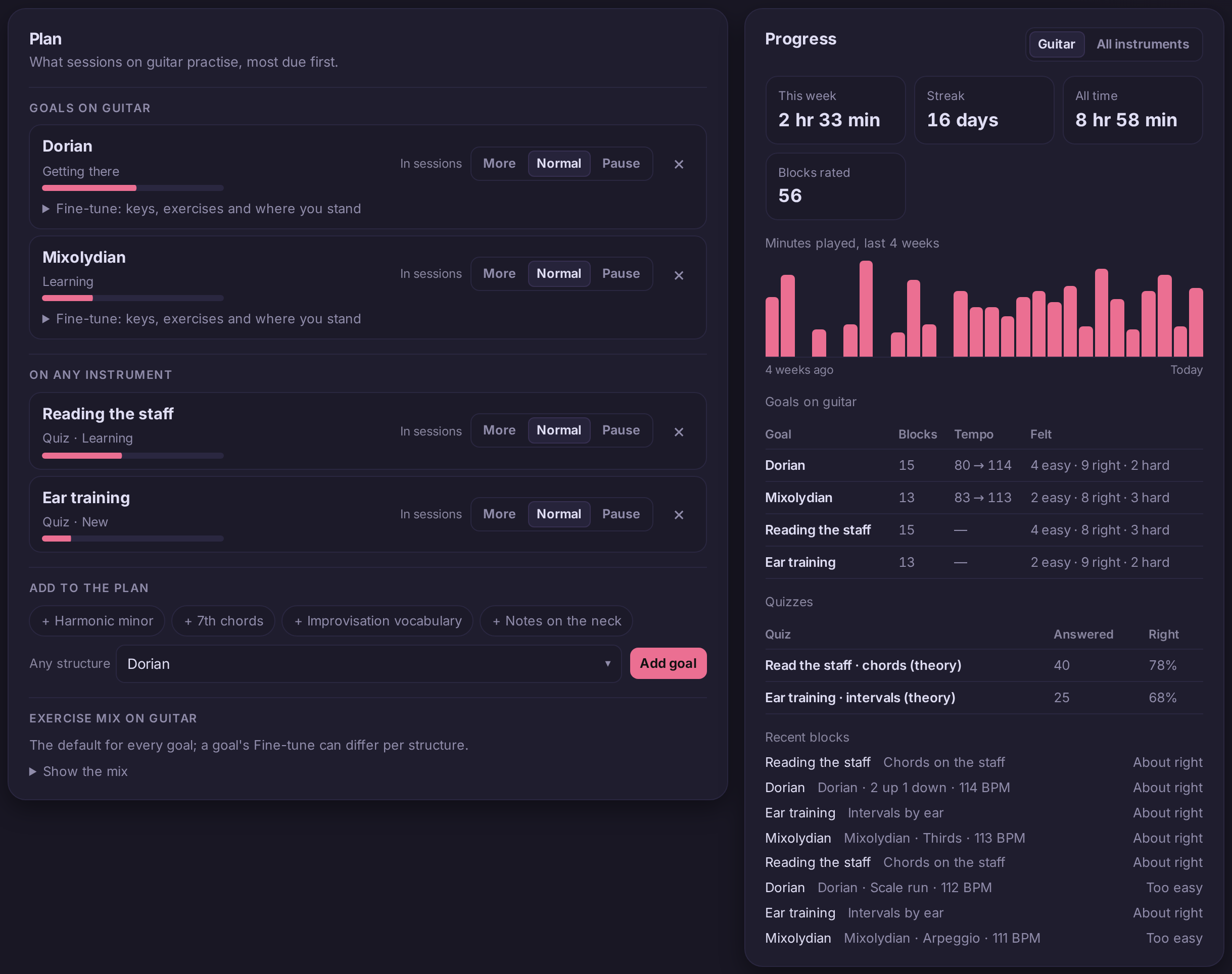
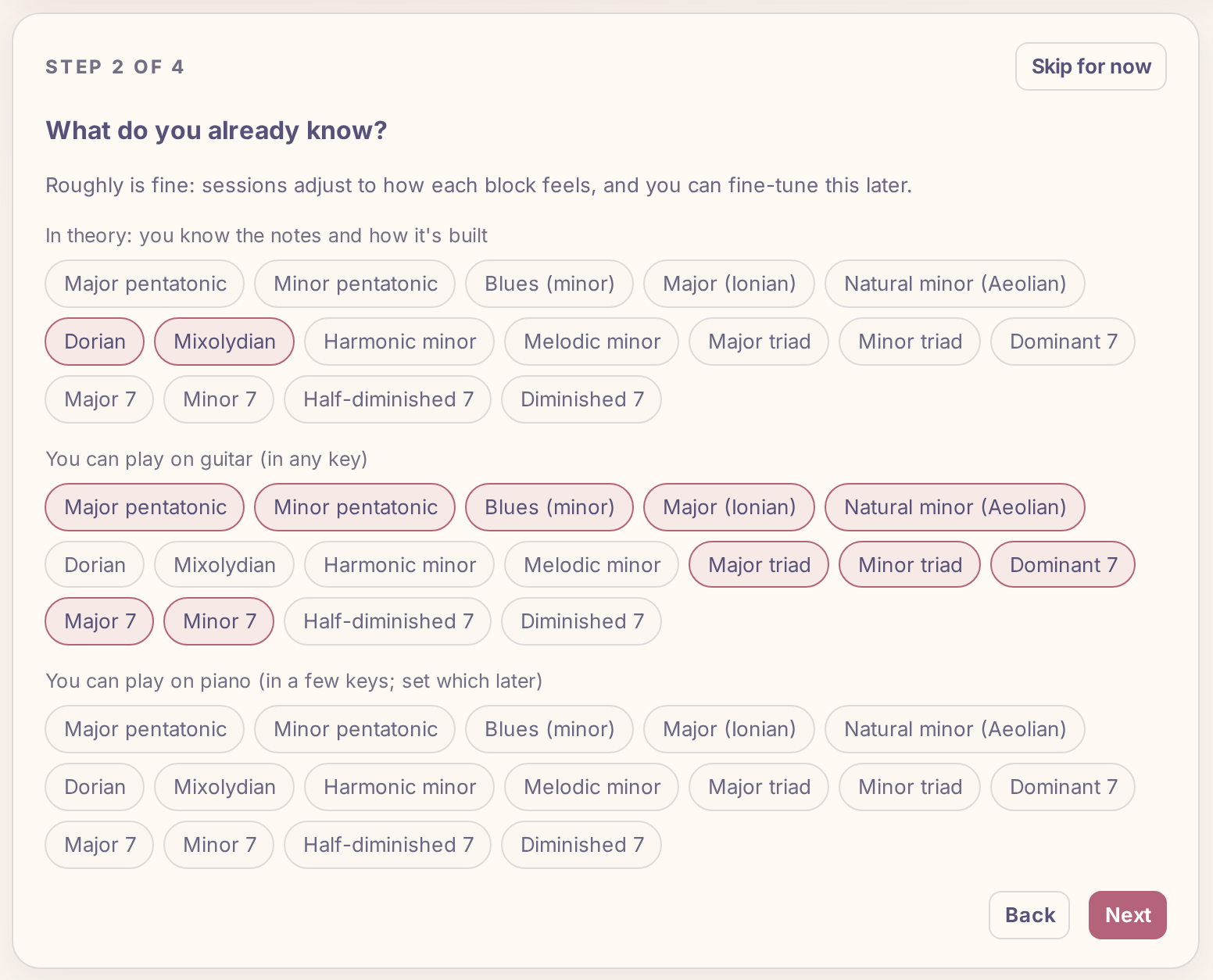
Practice is chosen for you, so the time goes into playing.
The exercises
Written for you, in every position, with fingering you can play
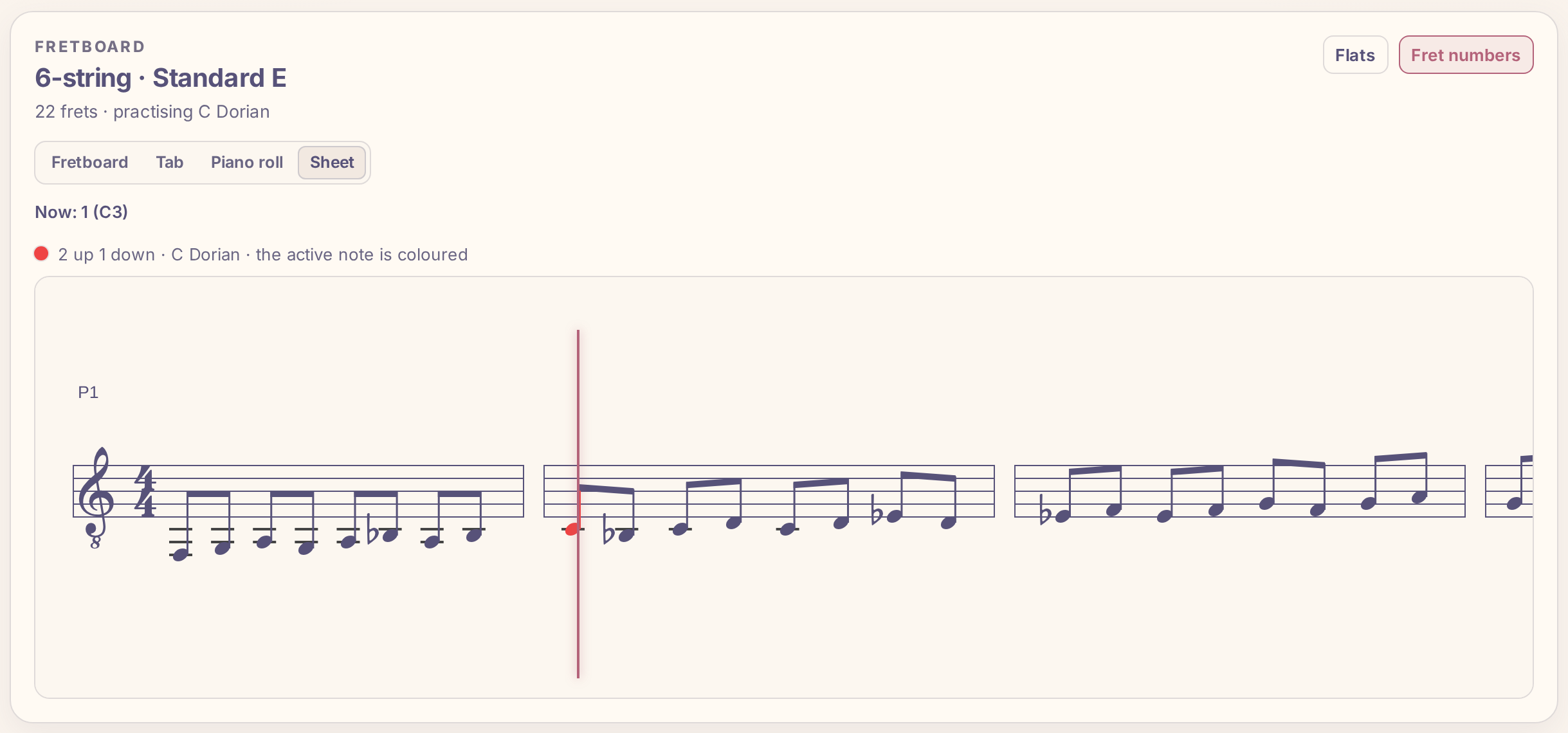
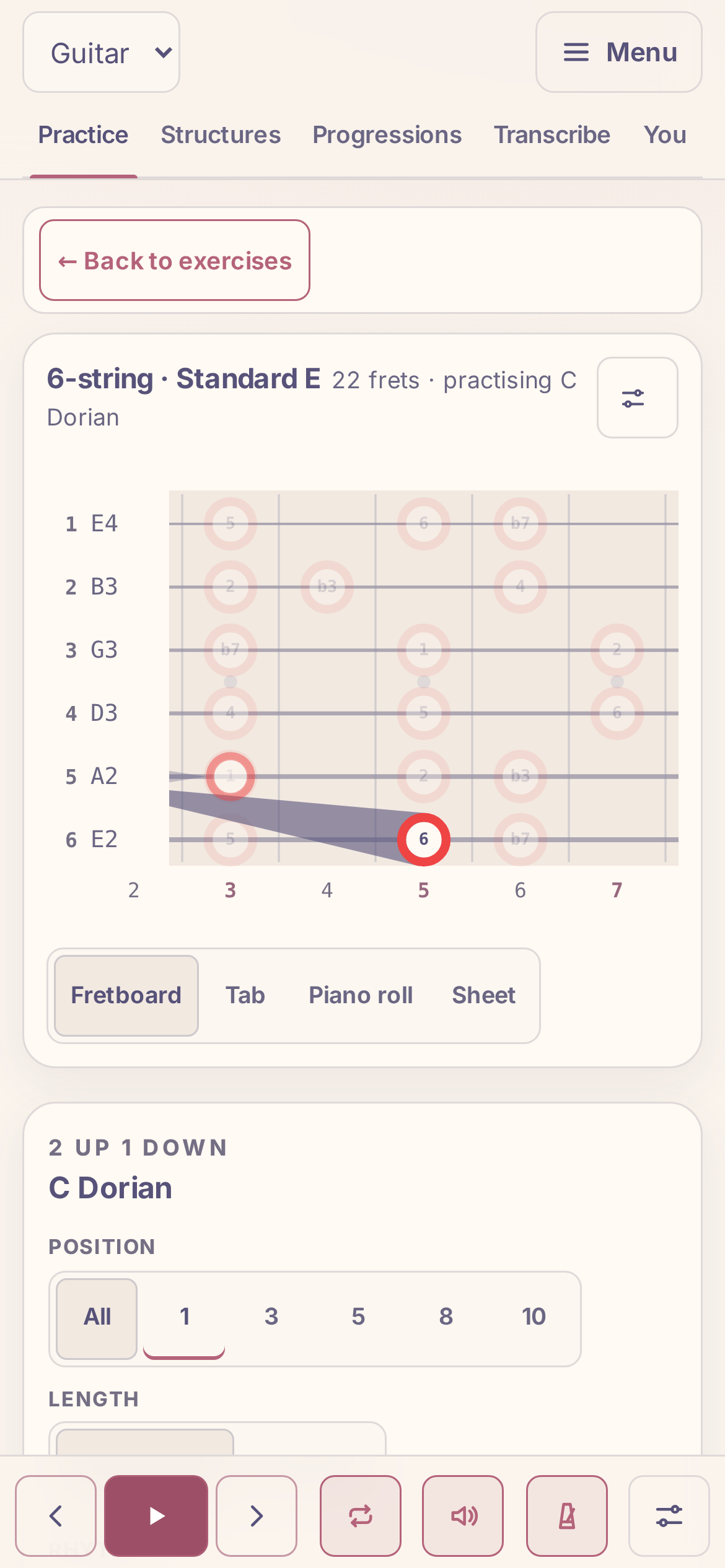
Pick any structure in any key and Practice Lab writes the run across the whole neck, up to three notes per string, position by position. The tab follows how a teacher fingers it: one finger per fret, stay in position, shift at a rest.
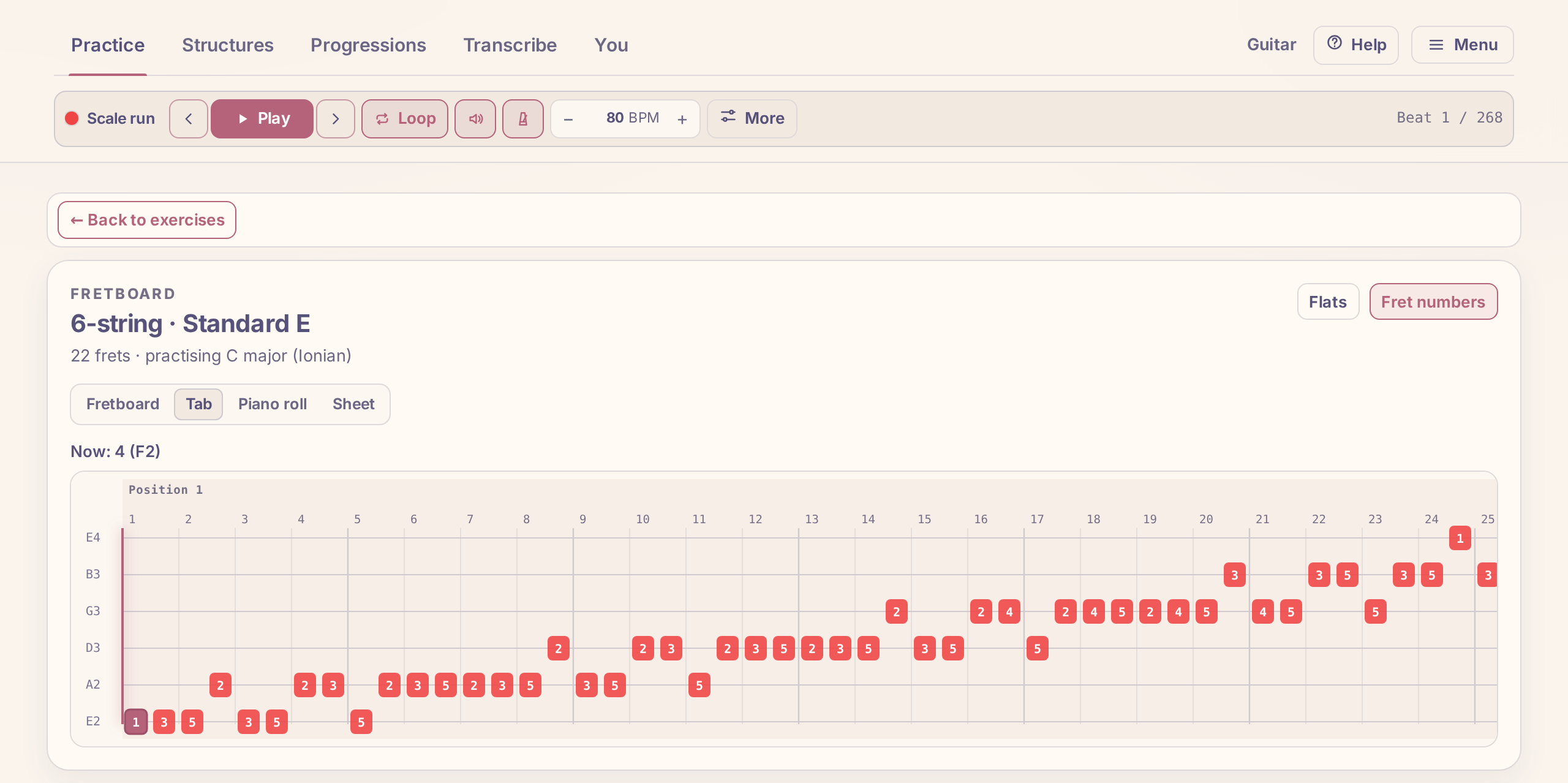
- Ladders
- 2 up 1 down
- 3 up 2 down
- Thirds to sevenths
- Chord shapes
- Arpeggios
- Triad pairs
- Guide tones
- Call and response
- Swing
- Triplets
- Offbeat start
Voicings and structures
Every shape of a chord, not just the one you know
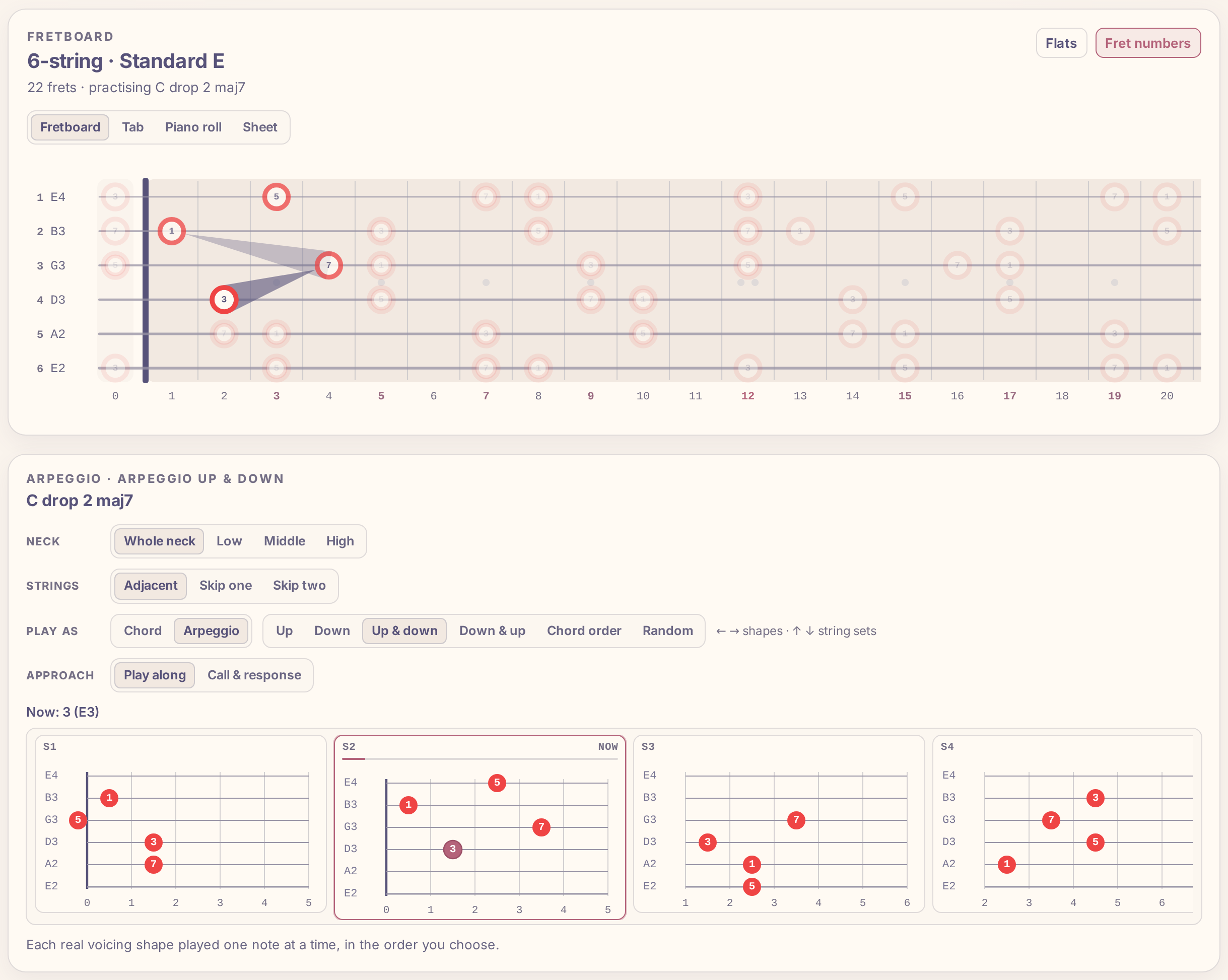
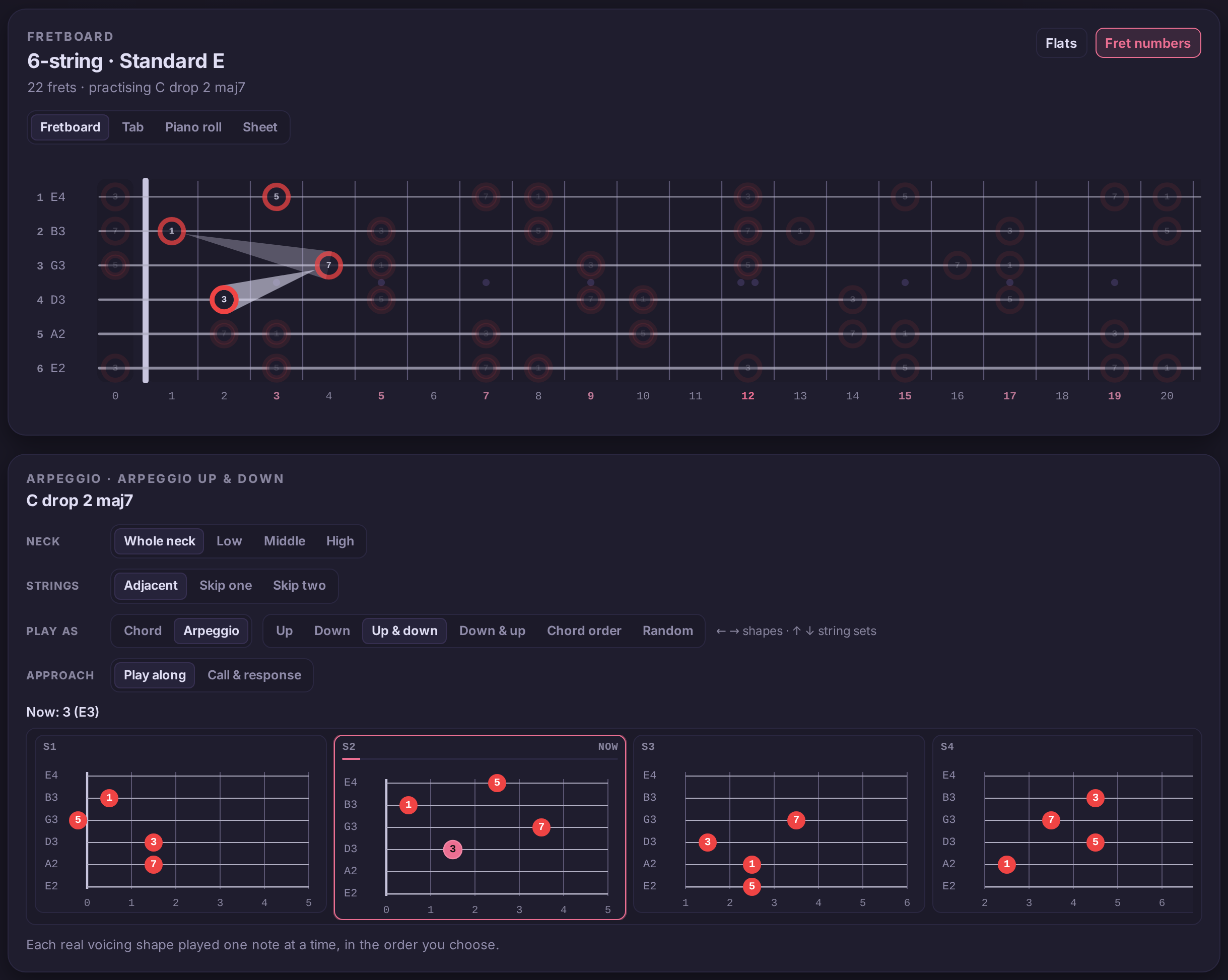
Drop 2 has twelve shapes: four inversions on three string sets. Practice Lab finds all of them, and drop 3, shells, rootless and quartal voicings, then stacks them as coloured layers over the scales they come from, labelled 1 3 5 7 by degree.
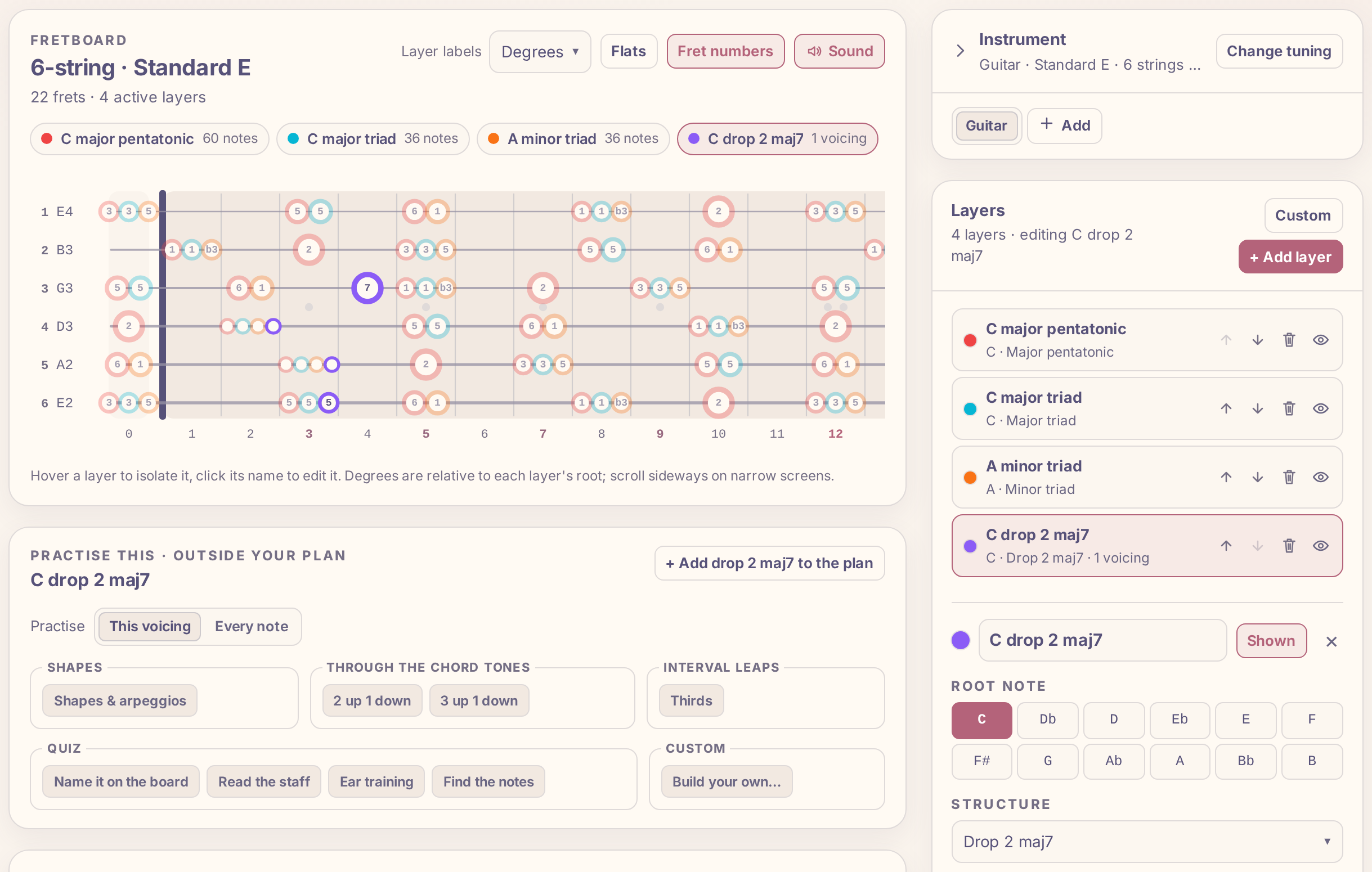
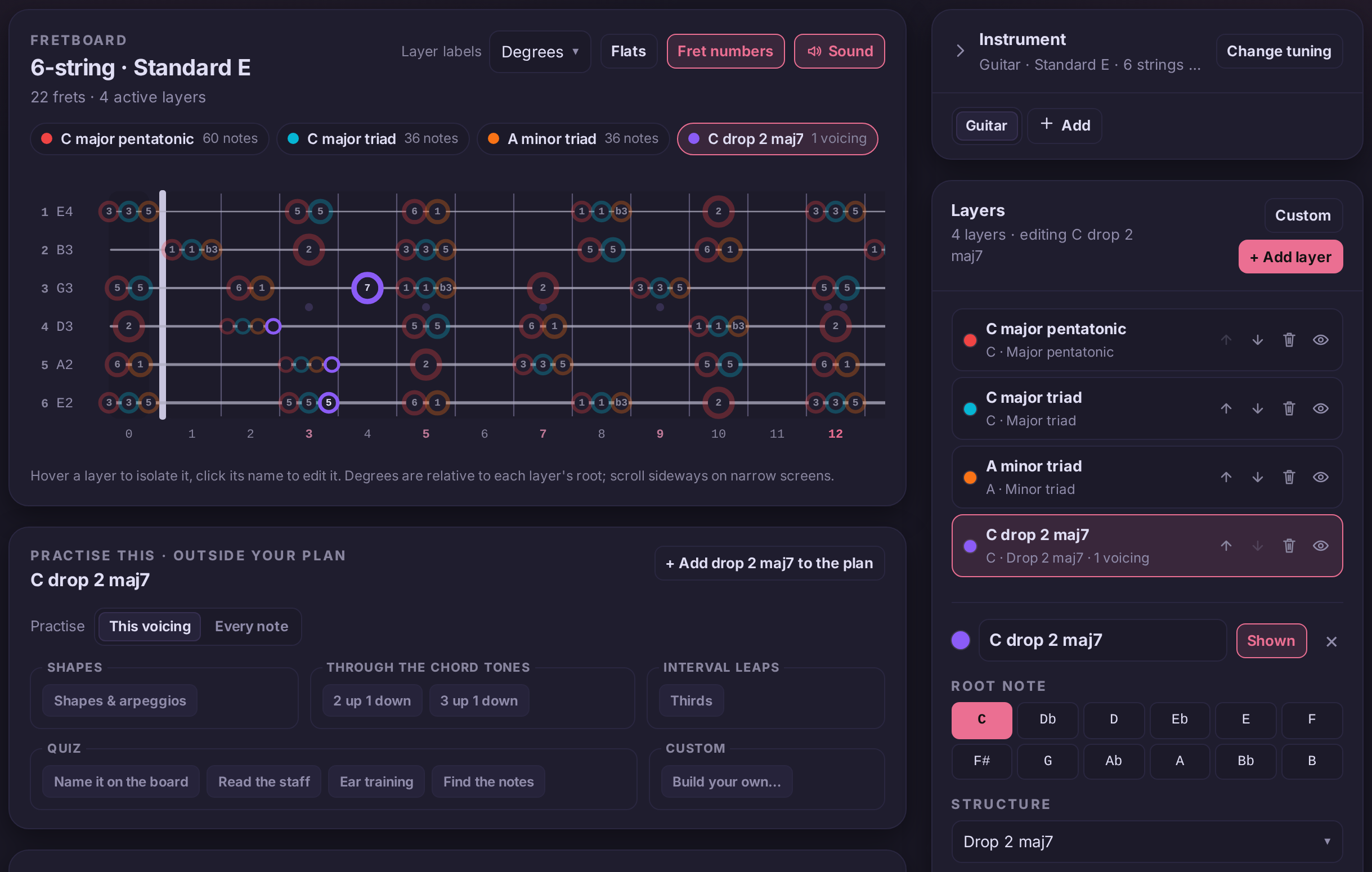
- Cmaj7, drop 2: one voicing, the others in the window faint
Progressions
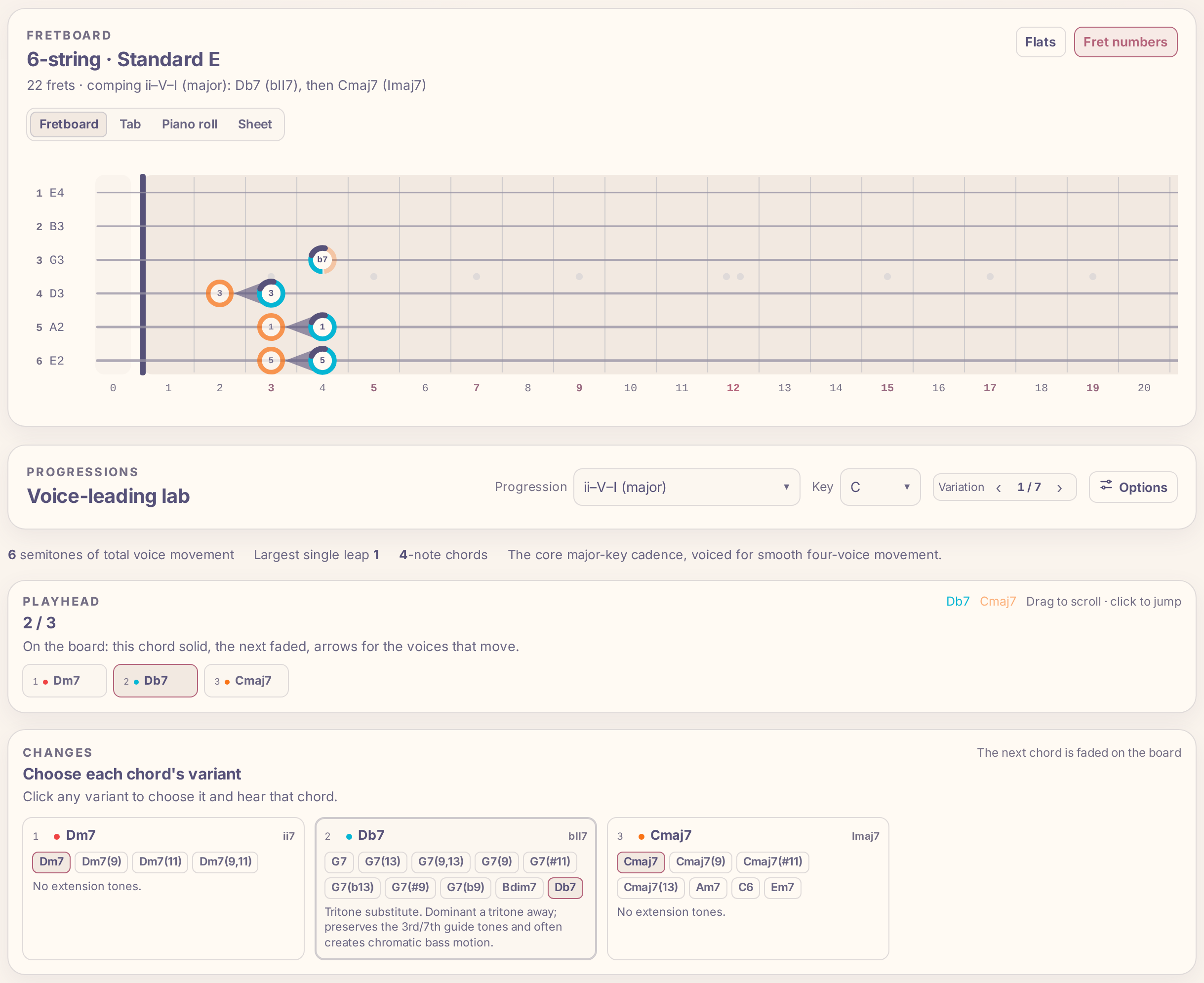
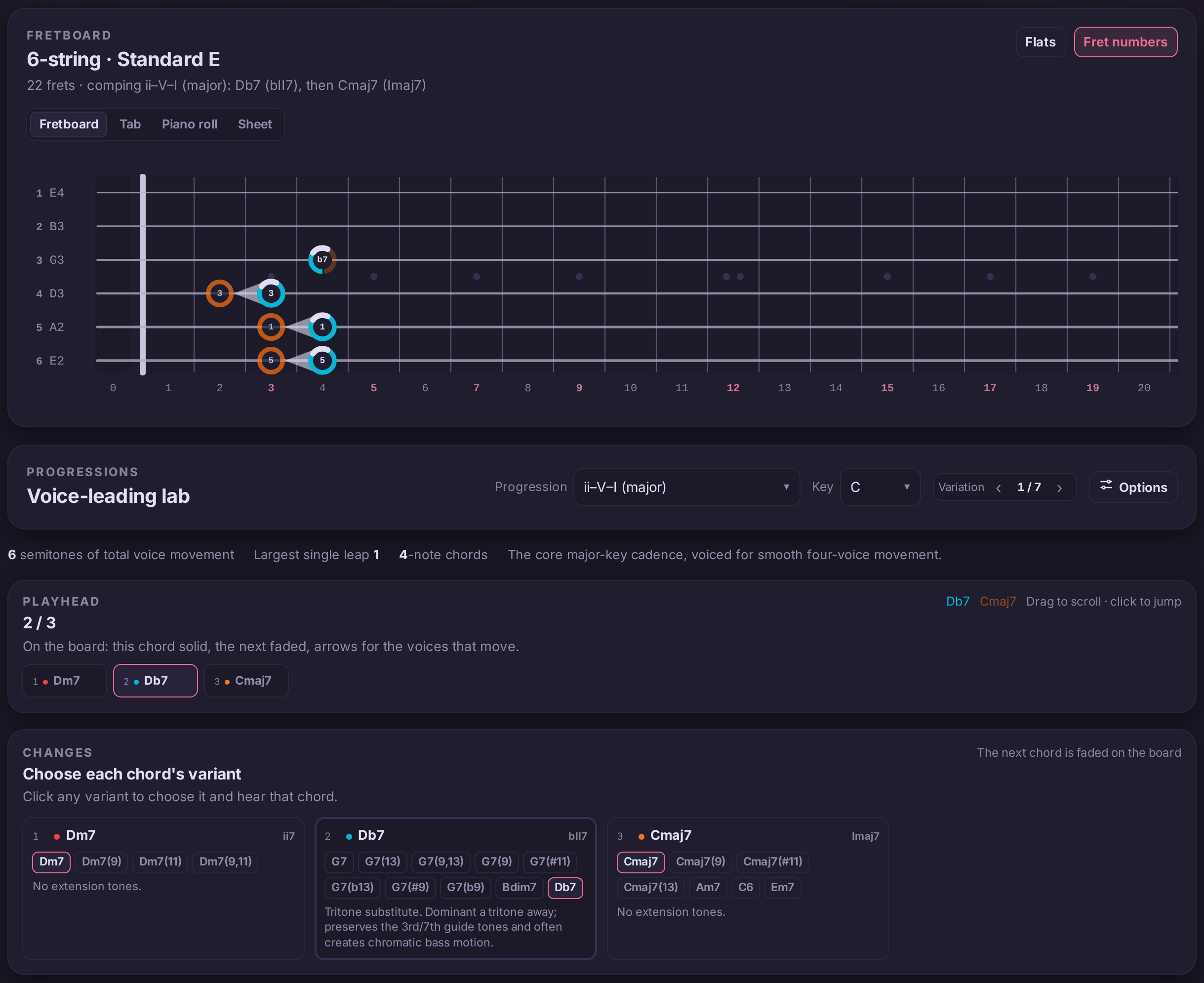
A voice-leading lab for the changes
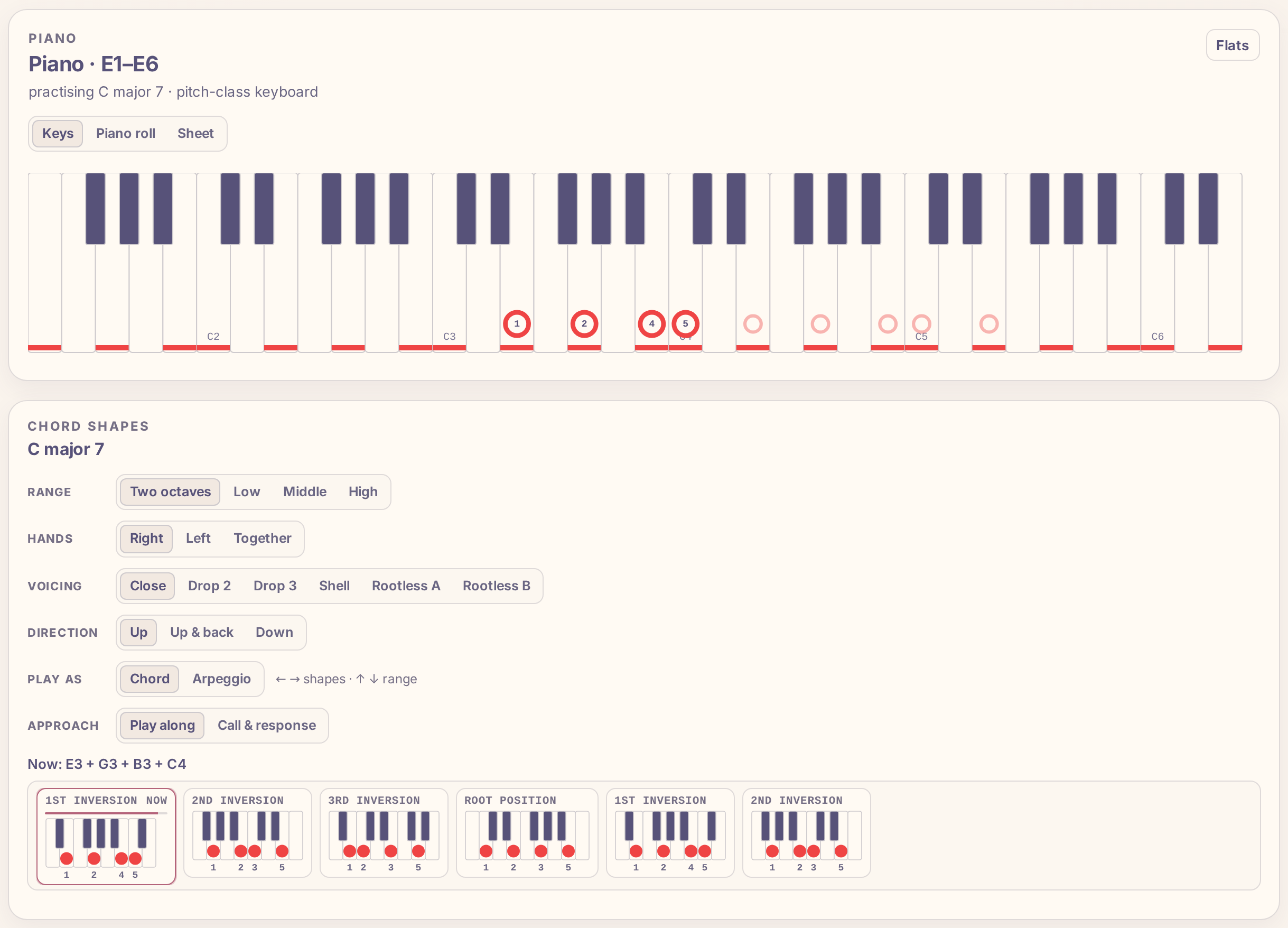
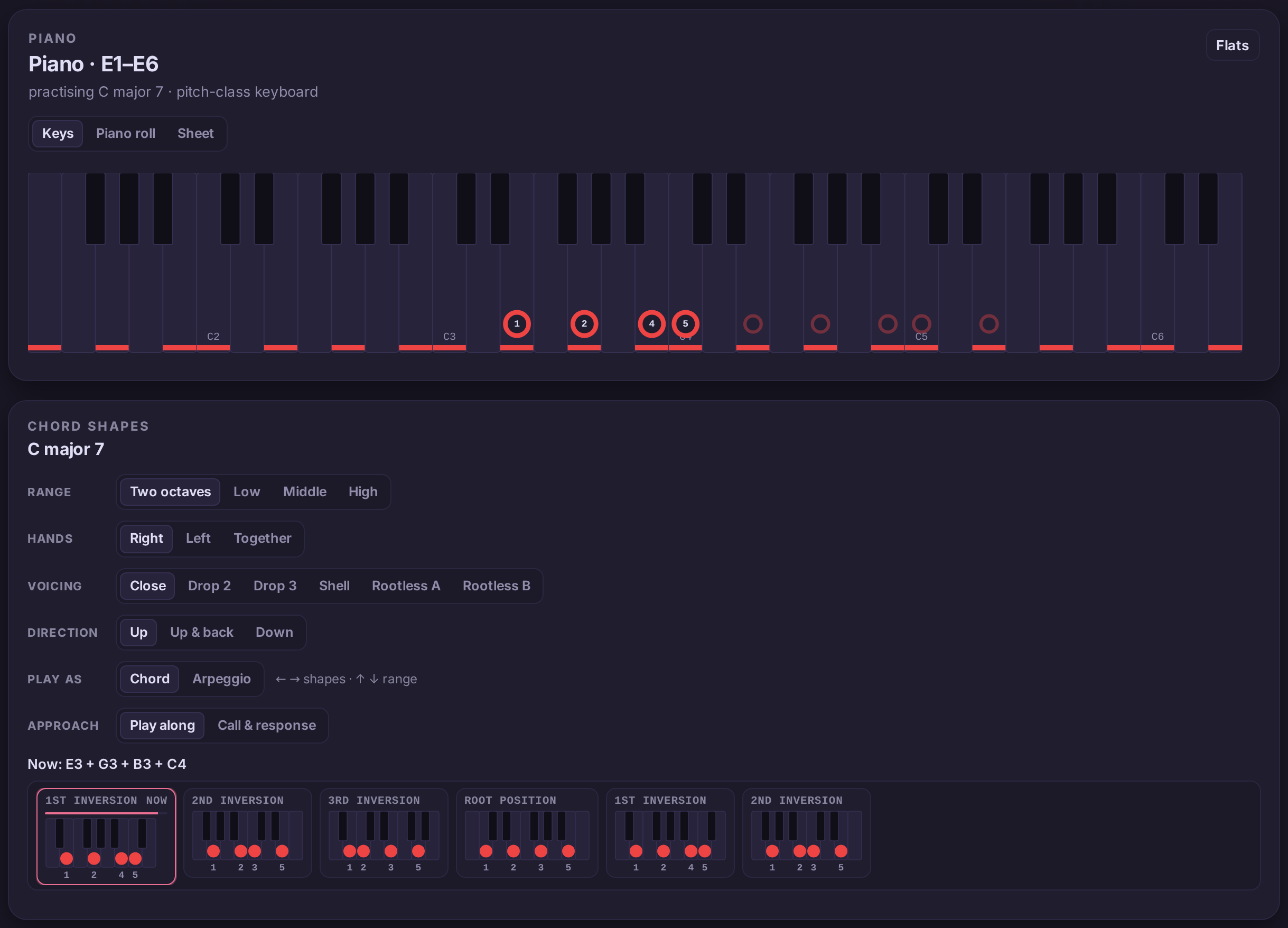
Comp through a progression with voicings chosen to move smoothly, see which voice moves where, and swap in substitutions such as the tritone sub to hear what they change.
Quizzes
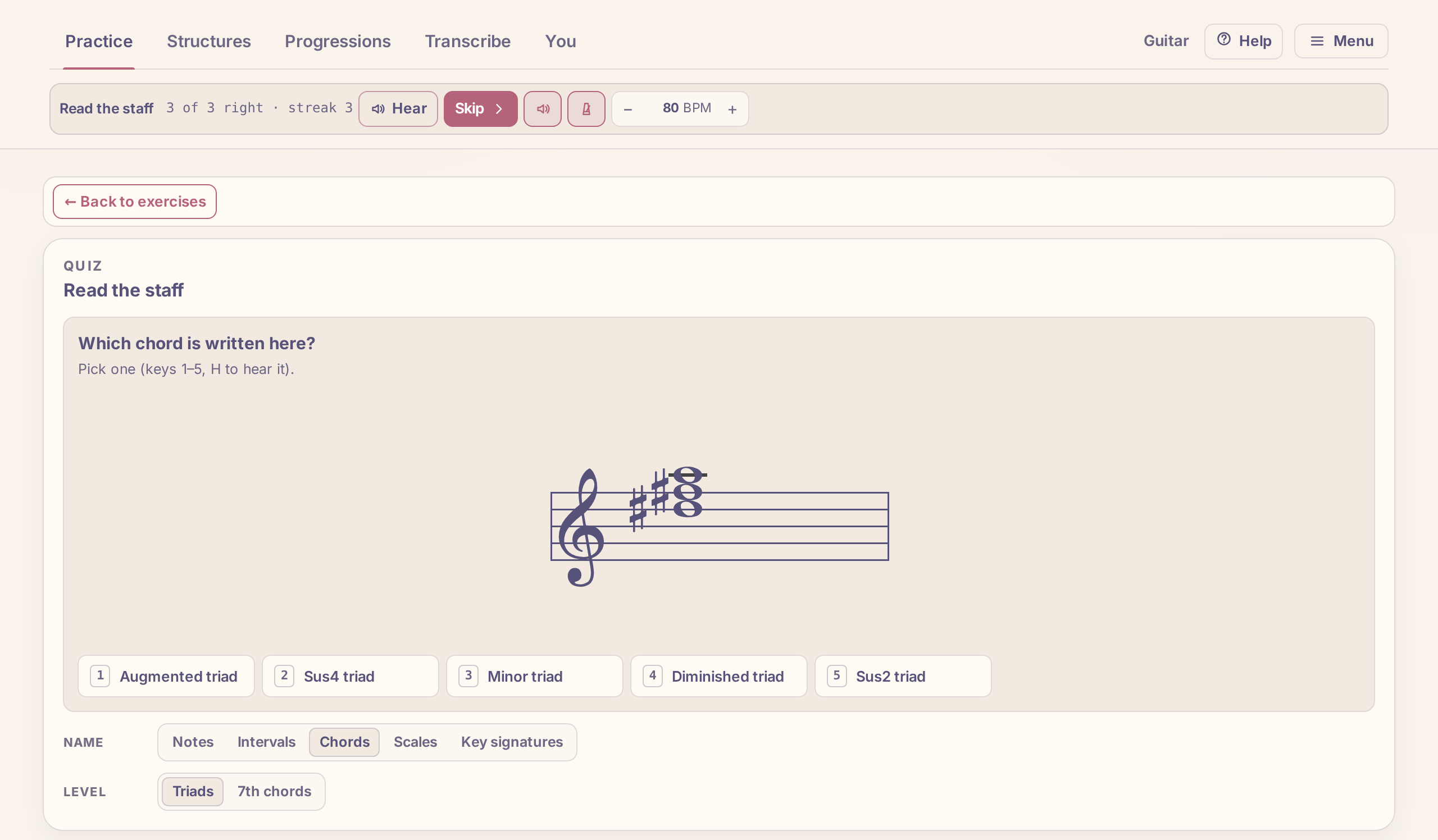
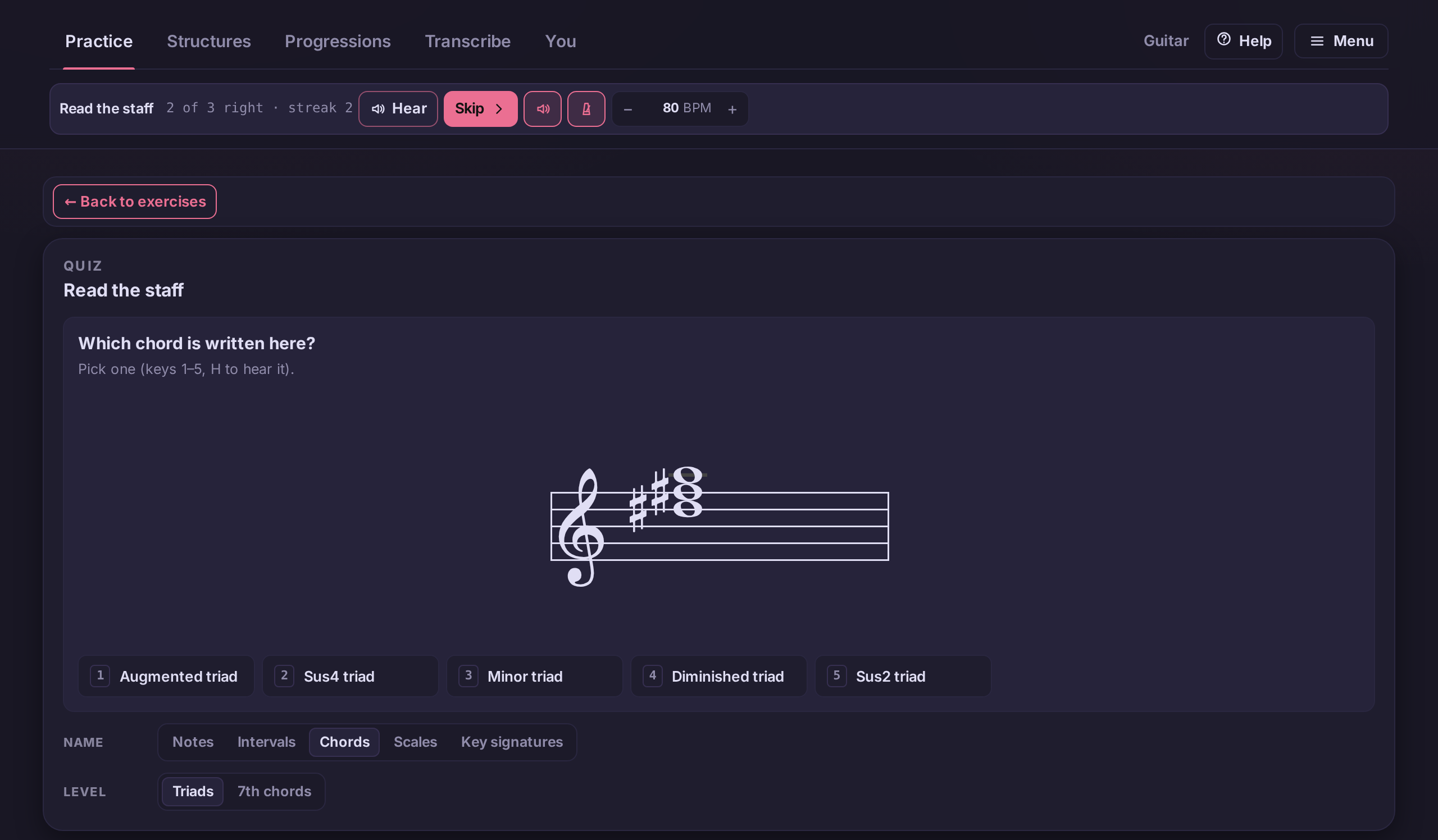
Name it, find it, hear it
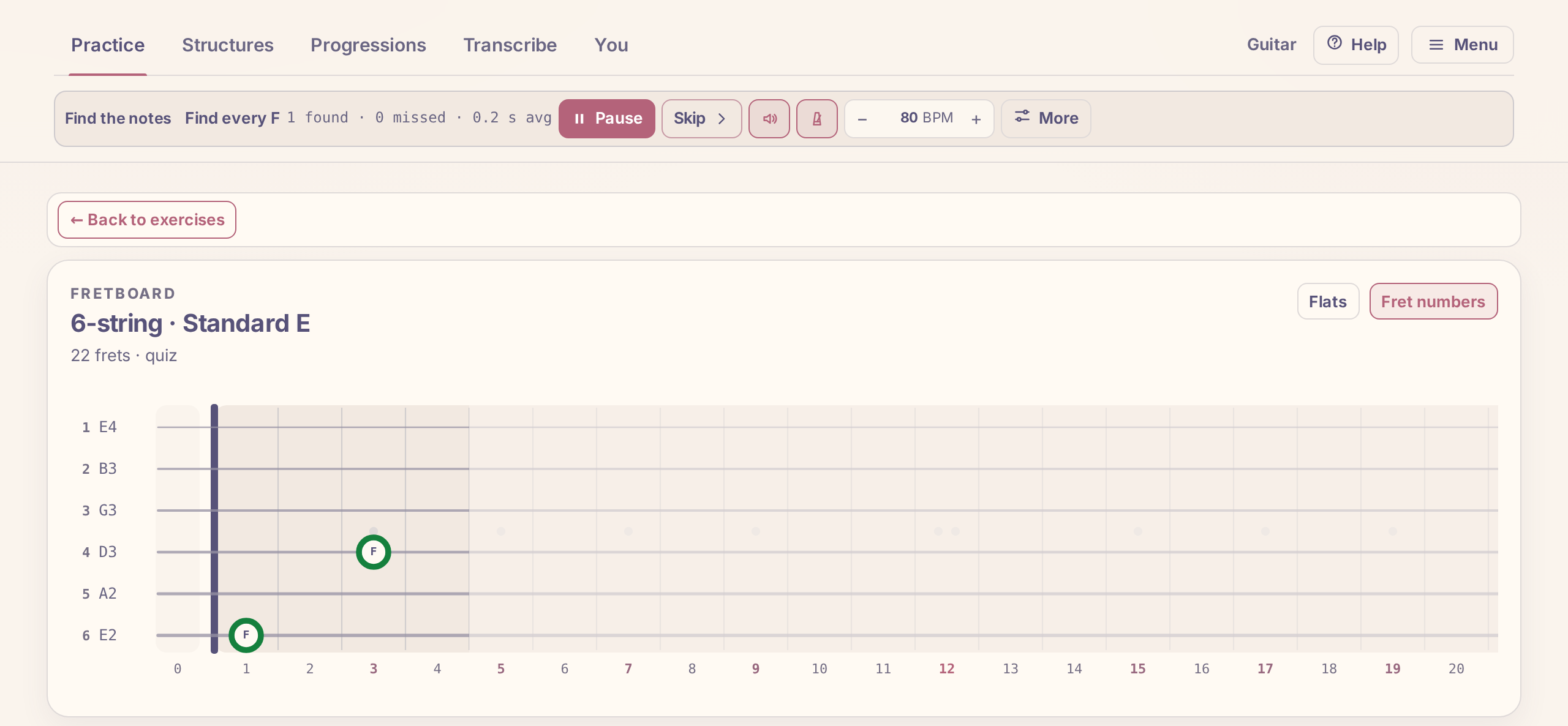
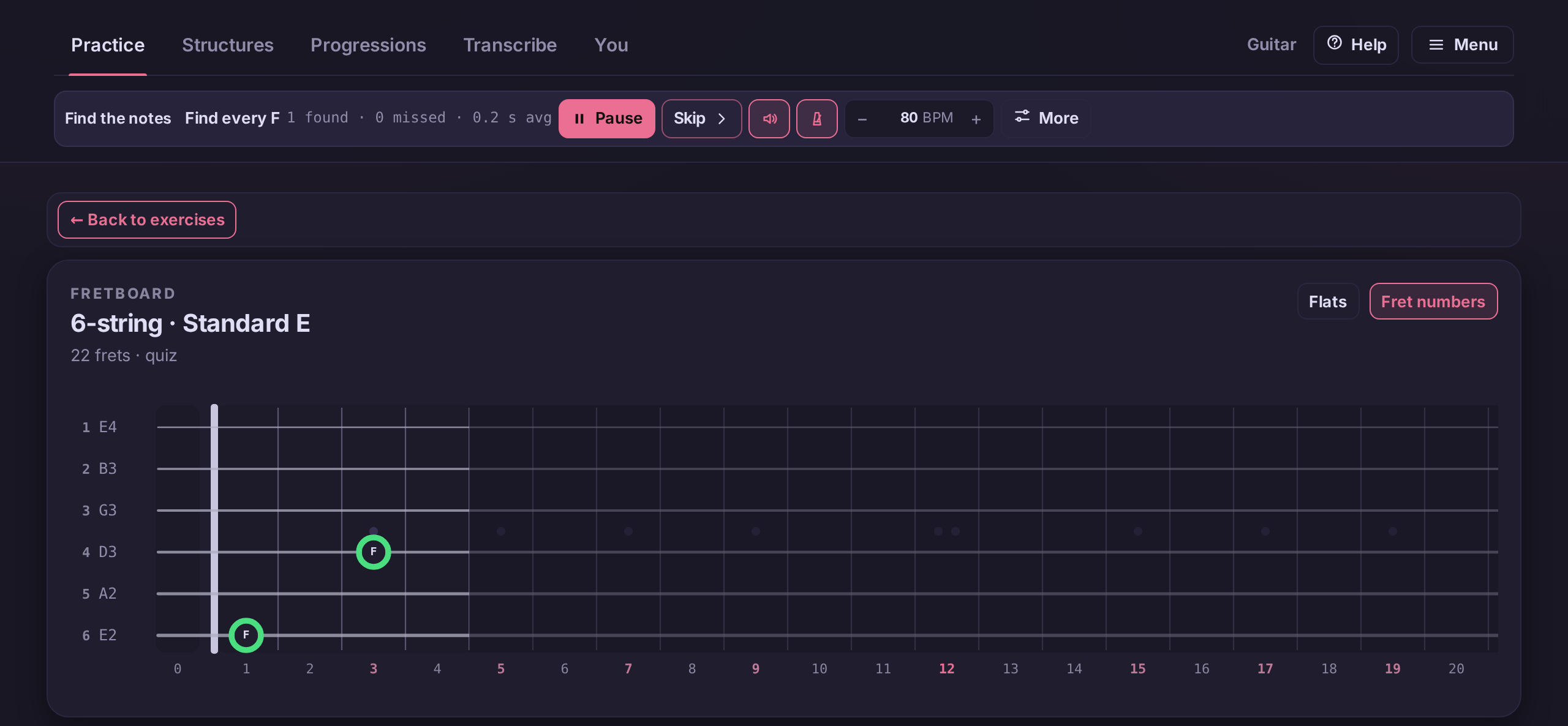
Notes, intervals, chords and scales on the board, on the staff and by ear, and every place a note lives on the neck, against the clock.
Transcribe
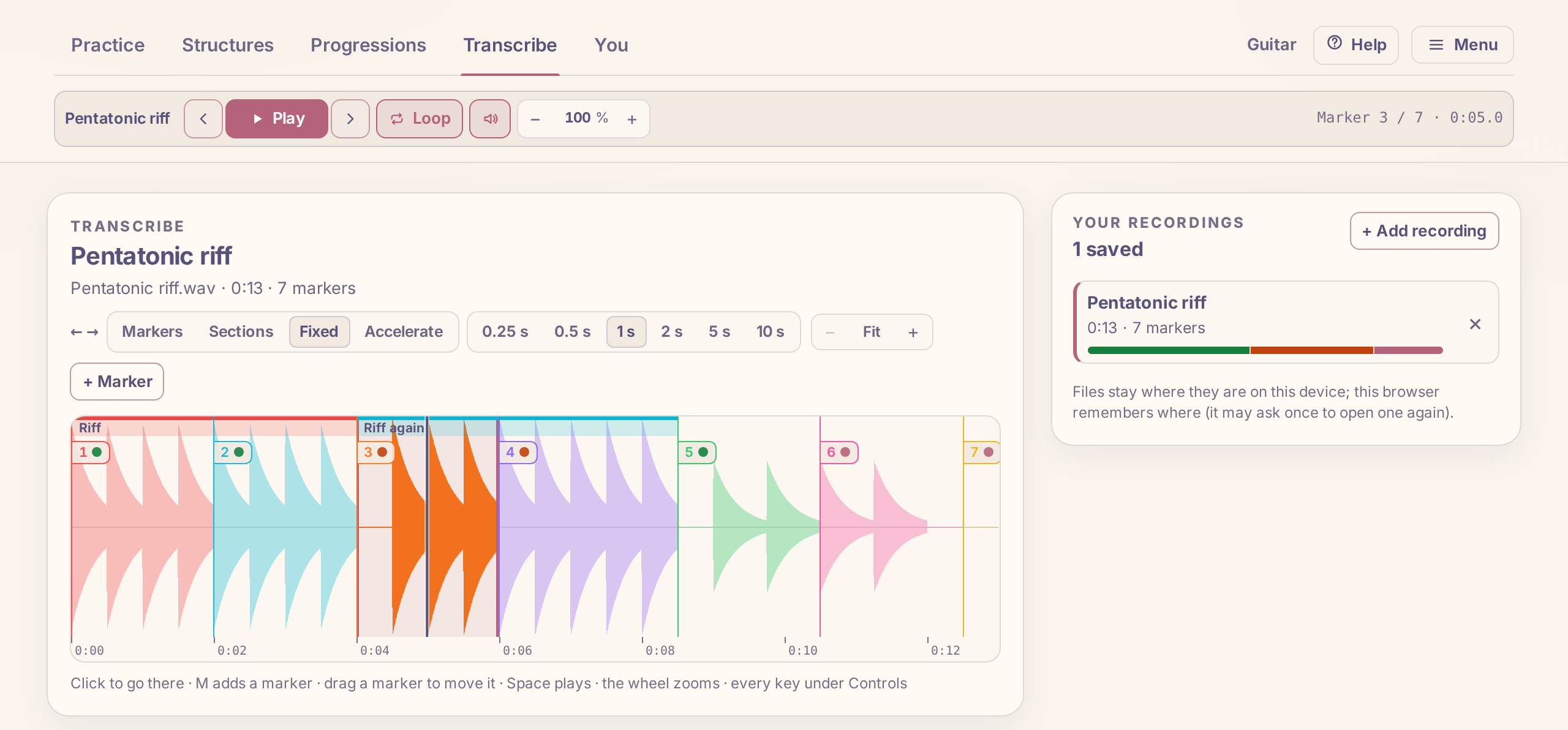
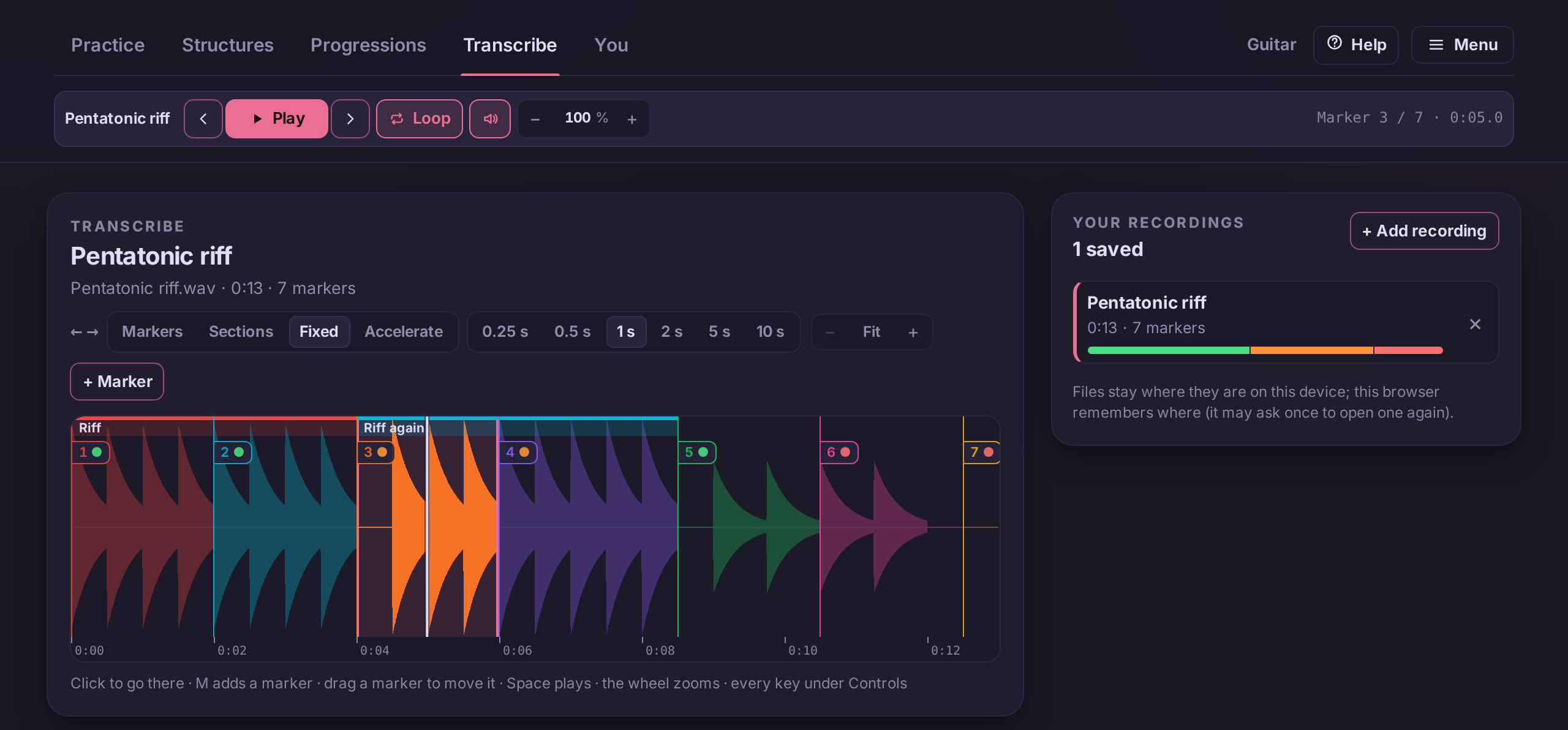
Learn a recording, section by section
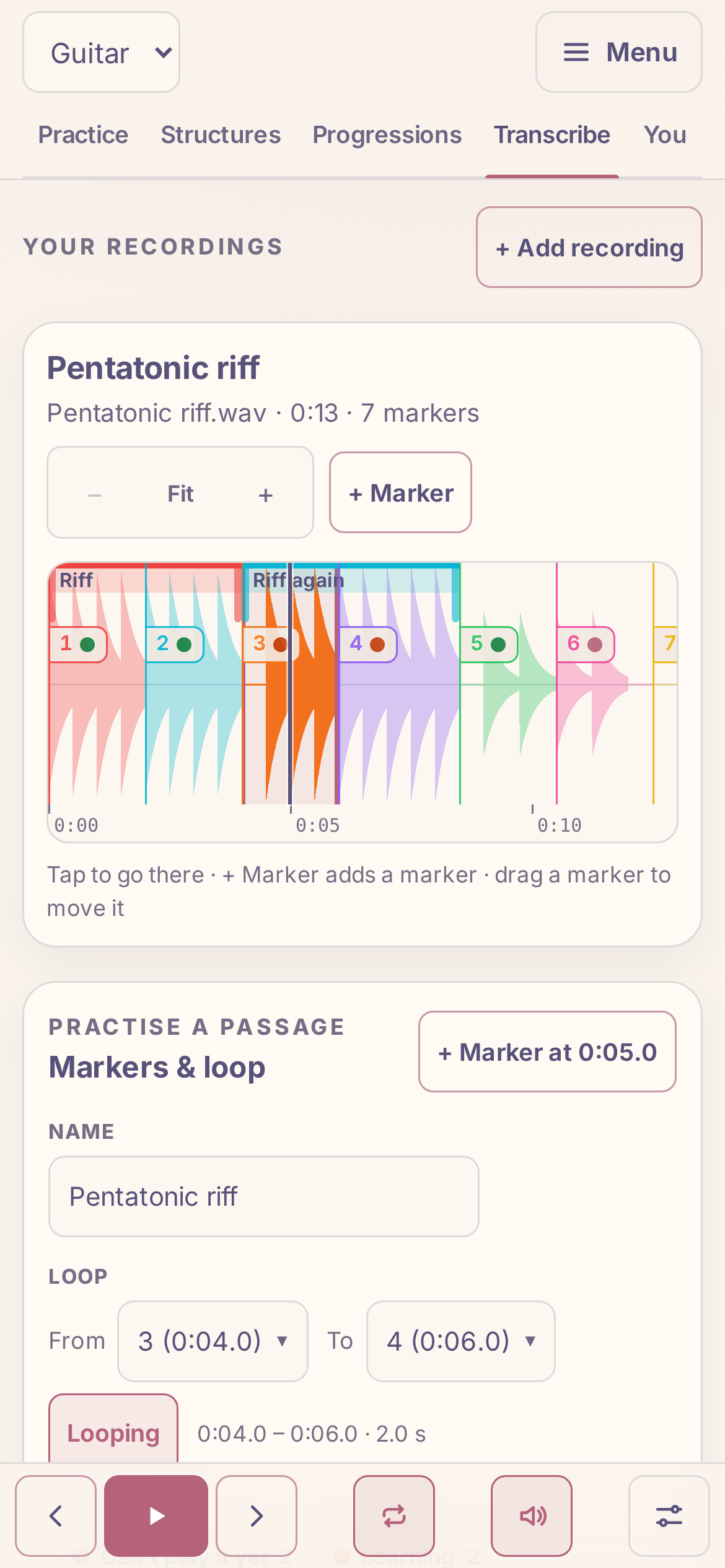
Mark the sections, loop the one you are learning, and slow it to 10 % without changing the pitch. Mark sections can't yet learning confident and watch the song fill in.
On your phone
The practice room, on the music stand
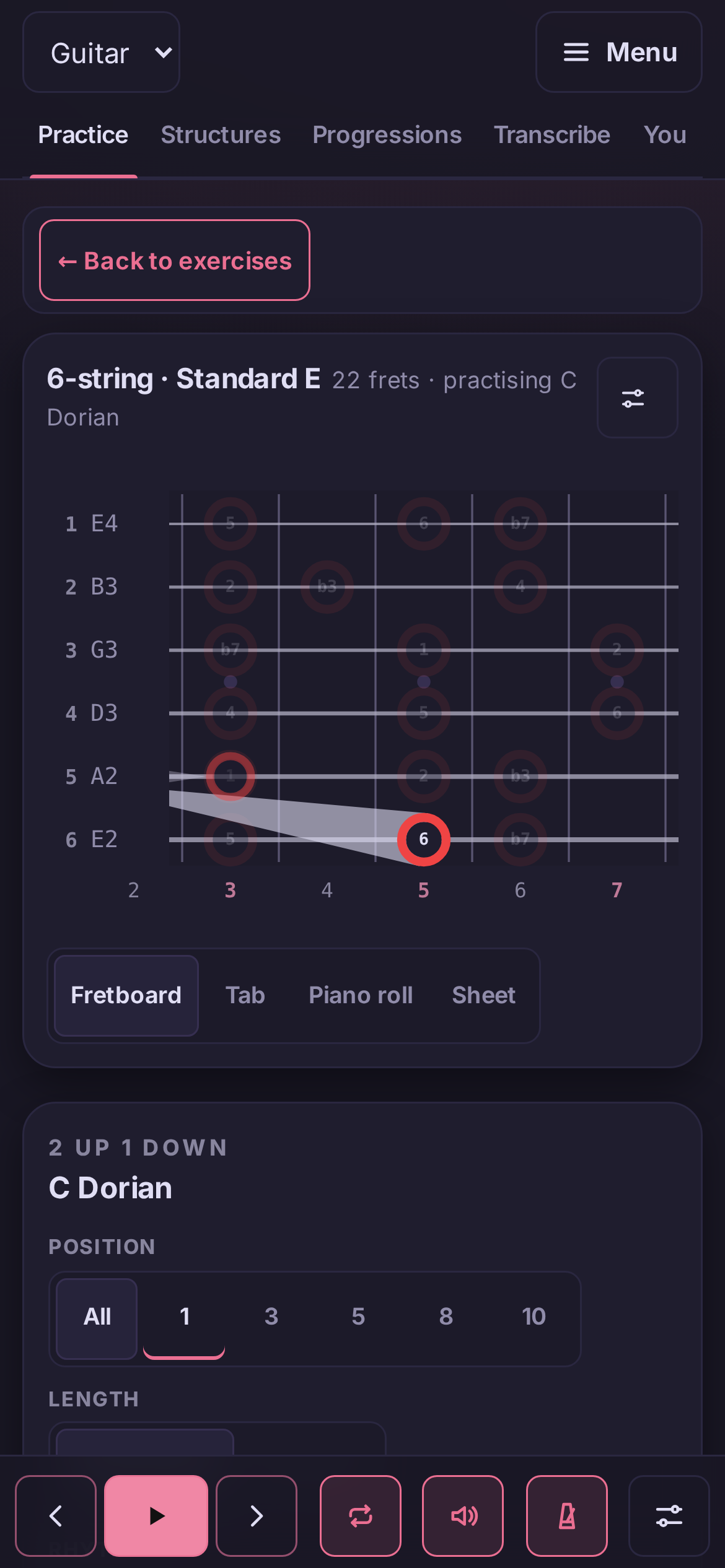
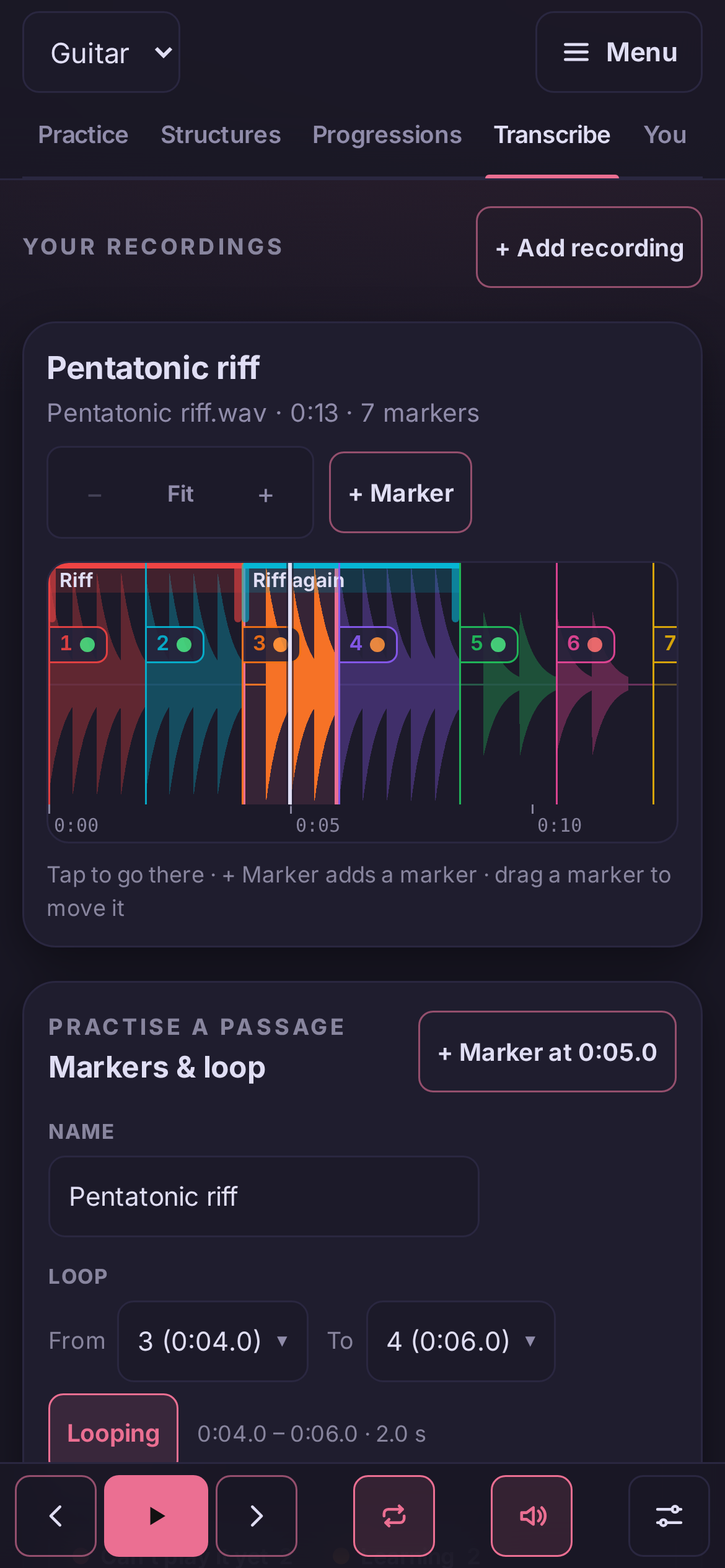
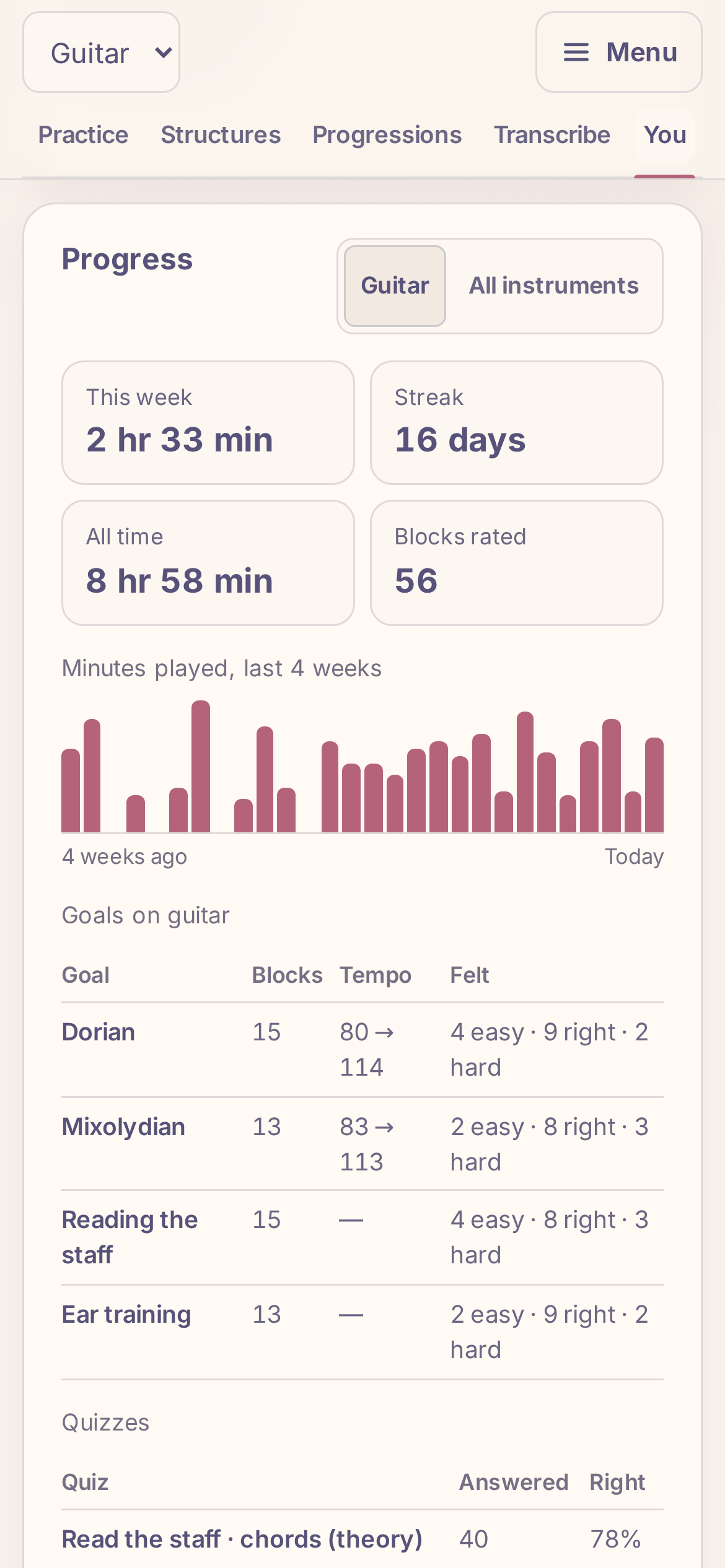
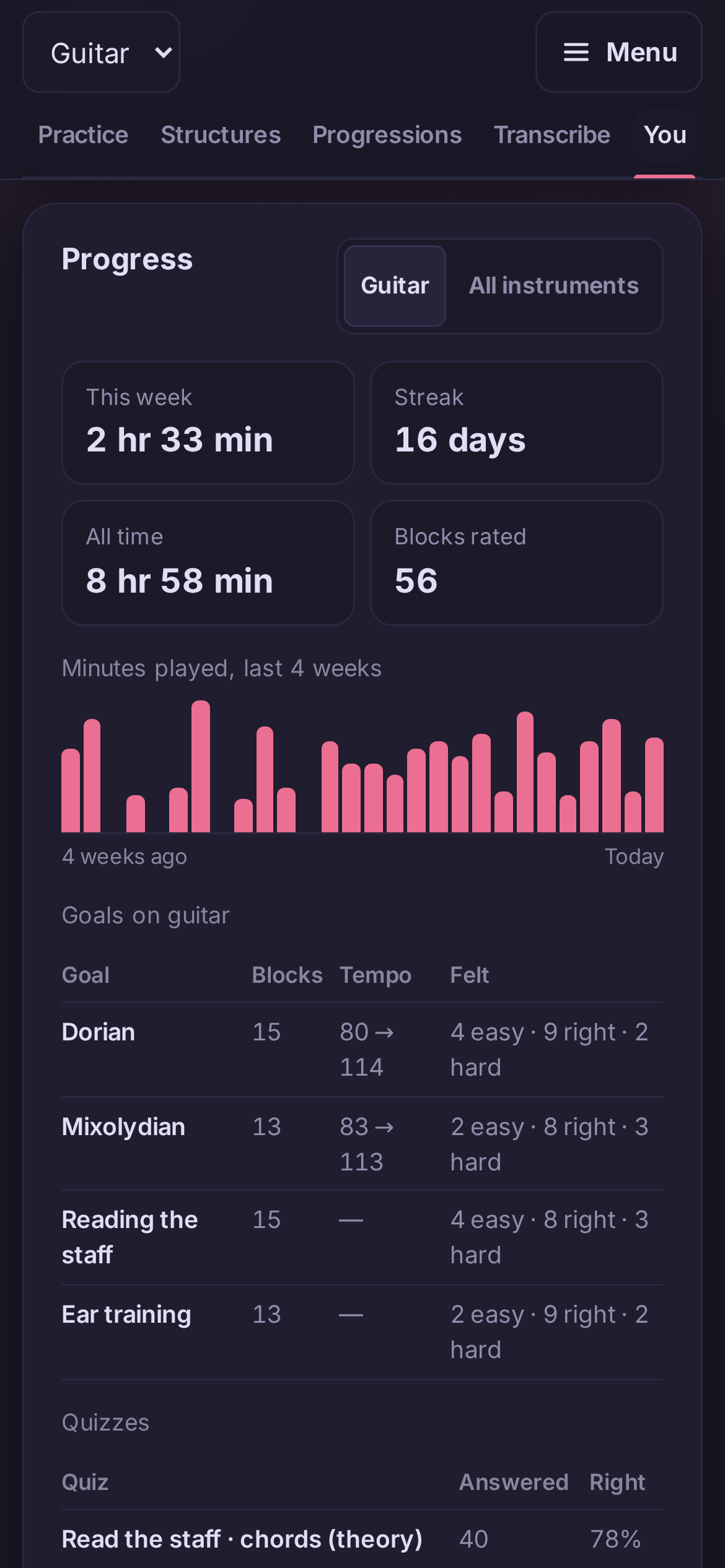
The same app on a phone: one section at a time, the transport at your thumb, nothing to install.
Why it is built this way
Practice that follows how skills stick
Recall, not re-reading
Labels fade from C to 1 to nothing, so you produce the notes instead of watching them.
Small chunks
Overlapping groups of a few notes, and eight-bar runs with a clear start and end.
Mixed, not blocked
Sessions interleave goals and pattern families instead of drilling one thing for twenty minutes.
Hard enough
Your answers keep each block just past comfortable, at a tempo you can play cleanly.
Free, with an optional Plus
Everything on this page is free, for good
Free
The plan, sessions, every exercise, voicings, progressions, quizzes and Transcribe. No account, no ads.
$0
Plus
Sync between your devices and an account backup, with progress over months, a tempo trainer and printable practice sheets on the way. Starts with 14 days free.
$50 a year · $15 a quarter · $129 once plus VAT where it applies
Yours, on your device
Your plan, progress and recordings stay in this browser. Export backup saves your plan and progress to a file whenever you like. Signing in for Plus syncs your practice data; recordings never leave your device.
In eleven languages
English · Čeština · Deutsch · Français · Español · Italiano · Português · Polski · 日本語 · 中文 · 한국어
Practice Lab is made by Graph Software s.r.o., which is also building Graph, a music library for collectors.